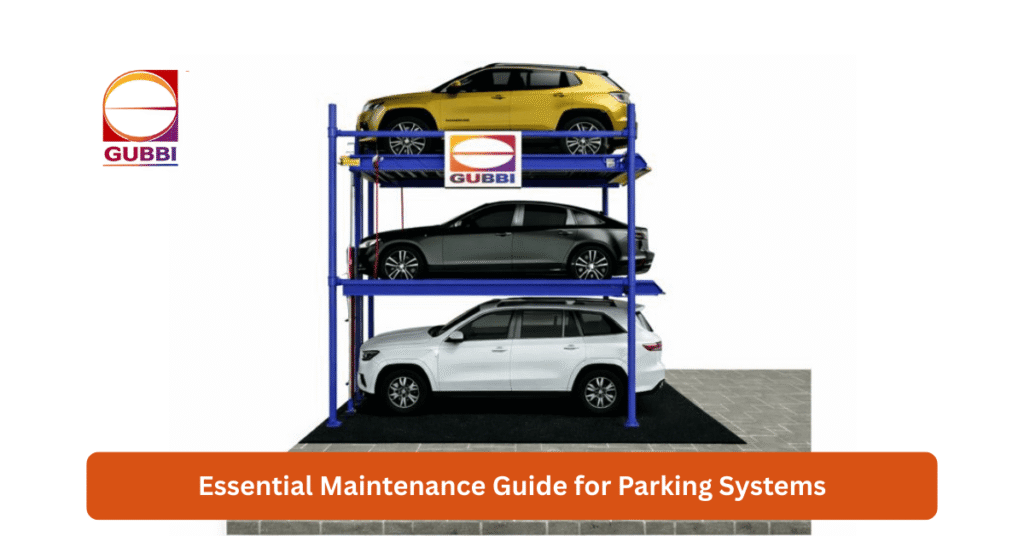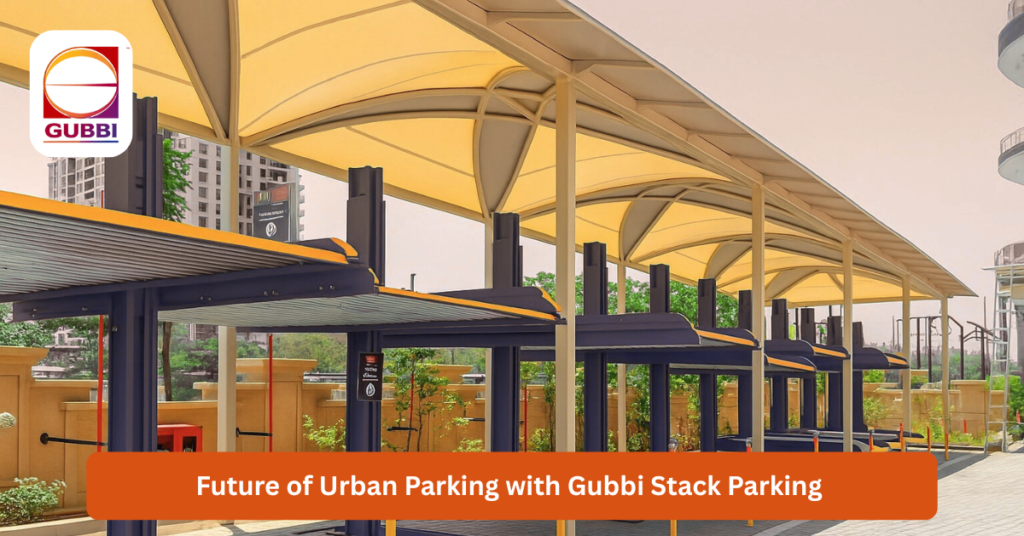
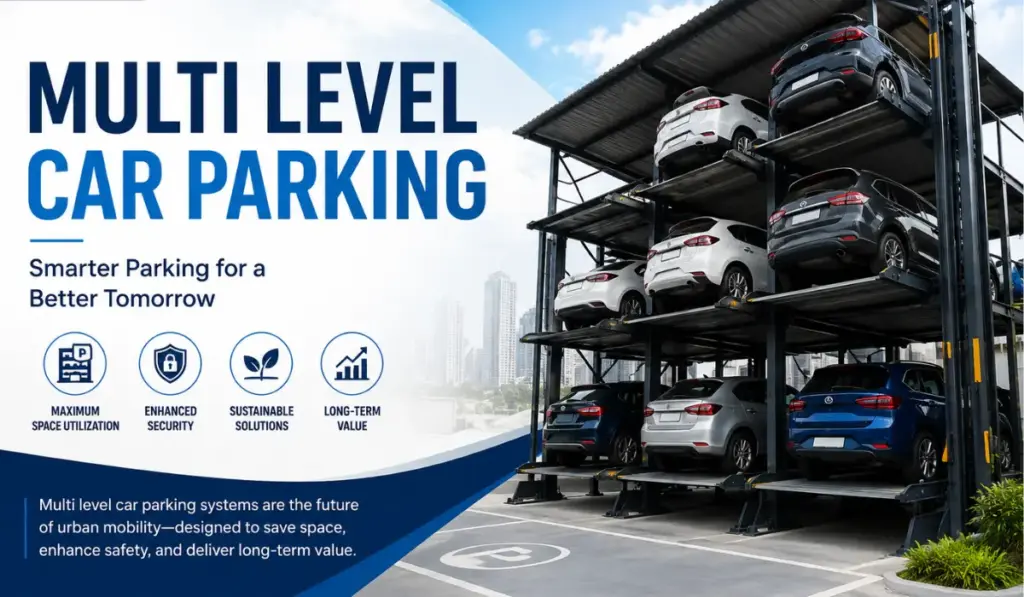
Multi Level Car Parking
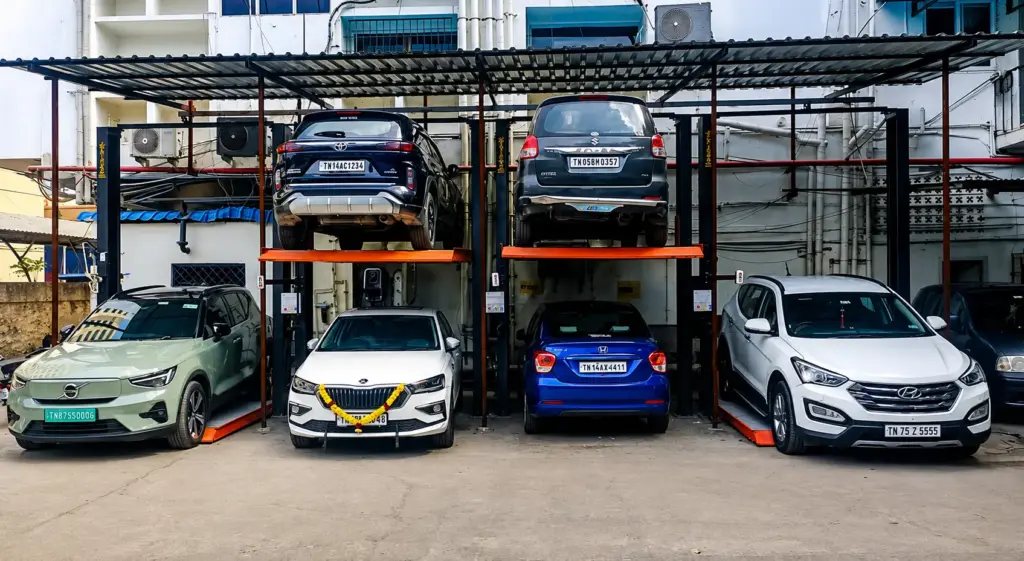
Multi level car parking systems are transforming urban parking infrastructure in India by maximizing space utilization, improving vehicle safety, and reducing parking congestion in residential and commercial properties
We’ll walk you through the essential benefits these systems bring to your property, from increased parking capacity to reduced construction costs. You’ll also discover the main types of multi level parking systems available, including stack parking systems, puzzle parking, tower parking, and fully automated parking solutions, and learn what to consider during the planning phase to ensure successful implementation. Finally, we’ll break down the key technology features that make these systems user-friendly and examine the real costs and potential returns on your investment.
Understanding Multi Level Car Parking Systems
Definition and core components of automated parking structures
Multi level car parking systems represent a revolutionary approach to urban space management, combining mechanical engineering with intelligent software to create highly efficient parking solutions. These structures use automated machinery to move vehicles vertically and horizontally, eliminating the need for drivers to navigate through multiple floors searching for parking spots.
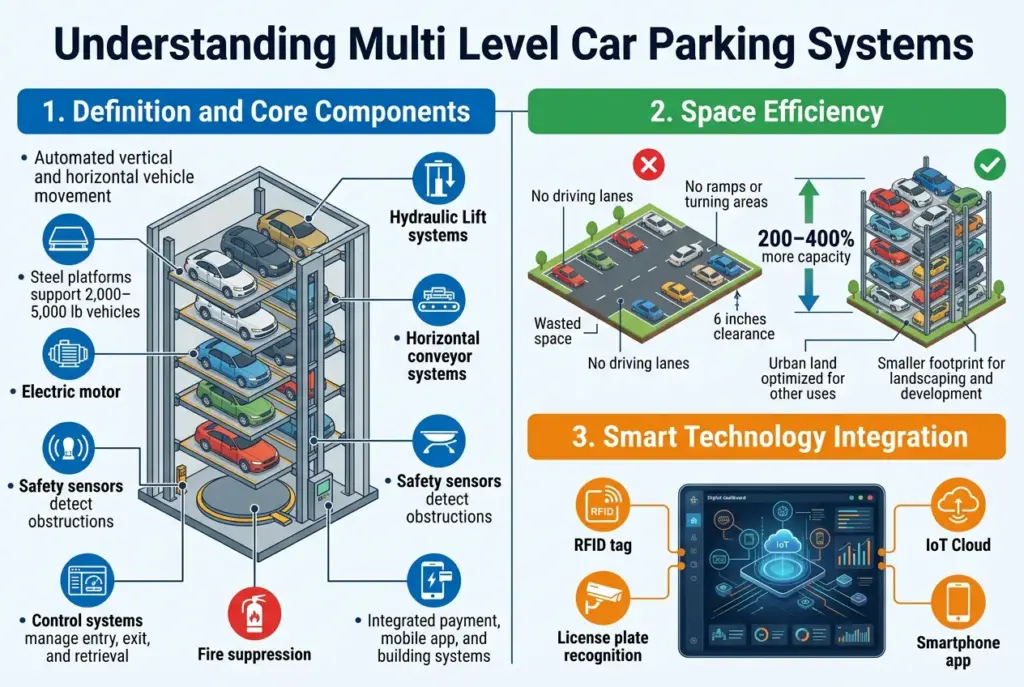
The core components include a sophisticated lifting mechanism, typically featuring steel platforms or pallets that can support vehicle weights ranging from 2,000 to 5,000 pounds. Hydraulic or electric lift systems provide the vertical movement, while horizontal conveyors or turntables position vehicles within designated spaces. Safety sensors throughout the structure monitor movement and detect any obstructions, ensuring secure vehicle handling.
Control systems form the brain of these operations, managing entry and exit sequences, tracking vehicle locations, and coordinating retrieval processes. These systems integrate with payment processors, mobile applications, and building management systems to create seamless user experiences. Modern installations also include fire suppression systems, emergency backup power, and climate control features to protect stored vehicles.
How vertical parking maximizes space efficiency
Vertical parking solutions can increase parking capacity by 200-400% compared to traditional surface parking lots on the same footprint. By stacking vehicles in compact arrangements, these systems eliminate the need for driving lanes, ramps, and turning areas that consume significant space in conventional parking structures.
A typical automated parking tower can store 20-30 vehicles in a space that would traditionally accommodate only 6-8 cars. This efficiency comes from precise vehicle positioning, with clearances as small as 6 inches between cars instead of the 24-30 inches required for manual parking. The elimination of human access areas, stairwells, and elevators further maximizes storage density.
Ground-level space utilization becomes dramatically more efficient, making these systems particularly valuable in dense urban environments where land costs are premium. Properties can dedicate more square footage to revenue-generating activities while still meeting parking requirements. This space optimization also reduces the overall building footprint, leaving more area for landscaping, pedestrian walkways, or additional development opportunities.
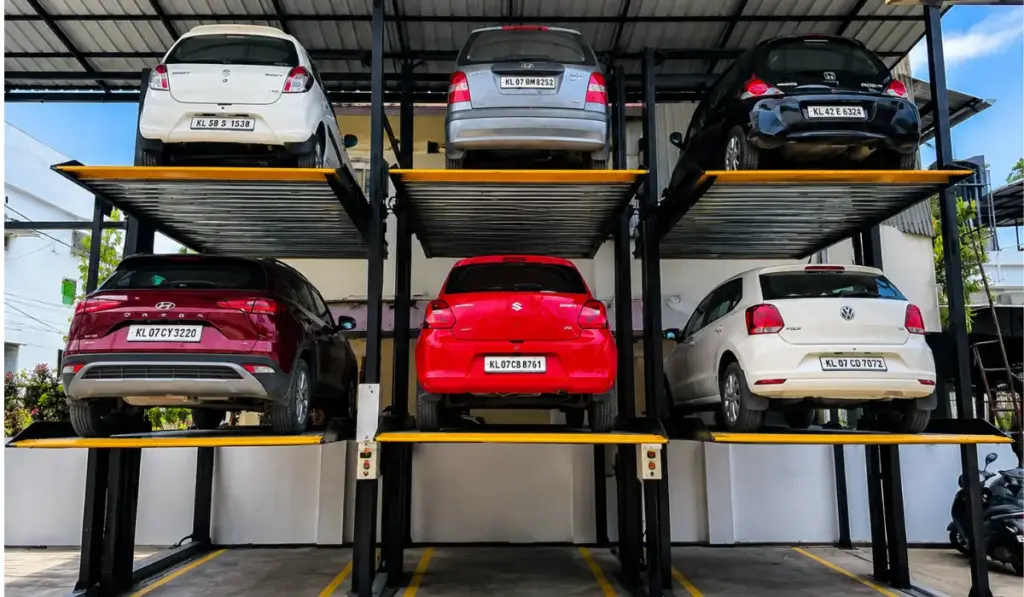
Technology integration that powers smart parking solutions
Modern Multi Level Car Parking integrate cutting edge technologies to deliver intelligent, user-friendly experiences. RFID and license plate recognition systems automatically identify vehicles and their designated parking assignments, eliminating the need for physical tickets or cards. Advanced sensors monitor vehicle dimensions and weight to ensure proper placement within the system.
IoT connectivity enables real-time monitoring of system performance, predictive maintenance alerts, and remote diagnostics. Facility managers can track usage patterns, identify peak demand periods, and optimize operations through data analytics. Mobile applications allow users to reserve spaces, monitor retrieval times, and receive notifications when their vehicles are ready for pickup.
Machine learning algorithms continuously improve system efficiency by analyzing historical data and user behavior patterns. These systems can predict busy periods, adjust retrieval sequences for faster service, and even learn individual user preferences for parking duration and timing. Integration with smart city infrastructure allows these systems to communicate with traffic management systems and provide real-time availability data to navigation apps.
Cloud-based management platforms enable remote monitoring and control, allowing operators to manage multiple facilities from centralized locations. Emergency response protocols can be activated remotely, and system updates can be deployed without on-site technical visits.
Key Benefits of Multi Level Car Parking
Dramatic space savings compared to traditional parking lots
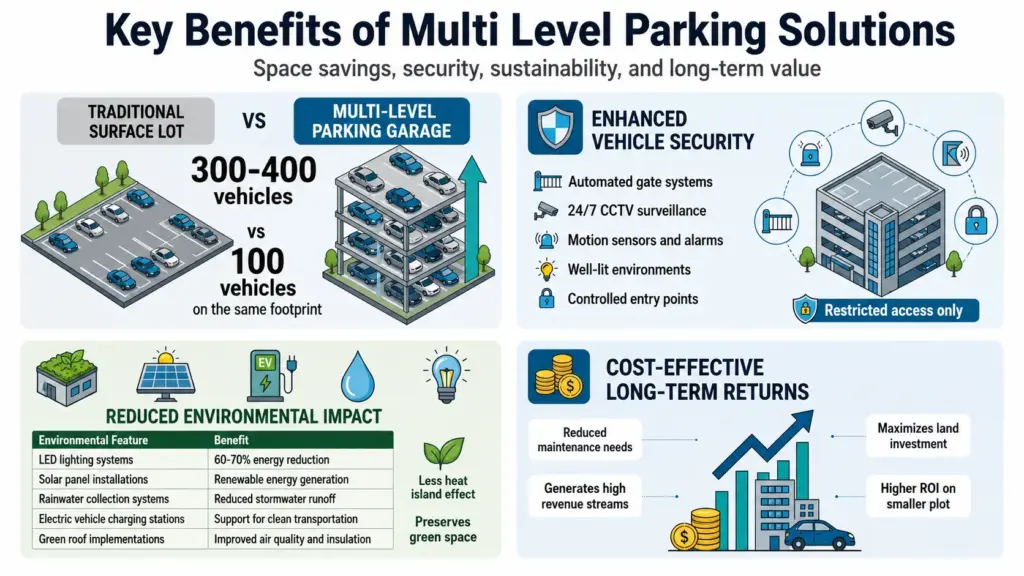
Multi-level parking systems completely transform how we think about urban space allocation. While traditional surface parking lots spread vehicles horizontally across valuable real estate, vertical parking structures stack cars efficiently upward, maximizing every square foot of available land. A typical multi-story parking garage can accommodate 300-400 vehicles on the same footprint that would hold just 100 cars in a surface lot.
This space efficiency becomes even more pronounced with automated parking systems. These cutting-edge solutions can fit up to 60% more vehicles in the same area compared to conventional ramp-style garages. The elimination of driving lanes, turning radii, and pedestrian walkways allows for tighter vehicle spacing and optimal land use.
Urban developers particularly benefit from this space optimization. Instead of dedicating massive areas to surface parking, they can build smaller parking footprints and use the remaining land for revenue-generating commercial or residential developments. This approach maximizes property value while still meeting parking demands.
Enhanced vehicle security through controlled access systems
Security ranks among the top concerns for vehicle owners, and multi-level parking facilities address these worries through sophisticated access control mechanisms. Unlike open surface lots where vehicles remain exposed and vulnerable, structured parking environments offer multiple layers of protection.
Modern multi-level facilities incorporate advanced security features including:
- Automated gate systems with ticket validation or card readers
- 24/7 CCTV surveillance covering all levels and entry/exit points
- Motion sensors and alarm systems for unauthorized access detection
- Well-lit environments that deter criminal activity
- Controlled entry points that limit access to authorized users only
Automated parking systems provide the highest security level since vehicles are stored in secured areas completely inaccessible to unauthorized personnel. Only the automated retrieval system can access parked cars, eliminating risks of theft, vandalism, or break-ins.
Reduced environmental impact and carbon footprint
Multi-level parking solutions contribute significantly to environmental sustainability through various mechanisms. The compact vertical design preserves natural landscapes and reduces urban sprawl, protecting green spaces that would otherwise be converted to surface parking.
These facilities also minimize the heat island effect common in large asphalt parking lots. Traditional surface parking absorbs and radiates heat, raising local temperatures and increasing energy consumption for nearby buildings. Multi-level structures reduce this impact by limiting ground-level paved surfaces.
Modern parking facilities often integrate green building technologies:
| Environmental Feature | Benefit |
| LED lighting systems | 60-70% energy reduction |
| Solar panel installations | Renewable energy generation |
| Rainwater collection systems | Reduced stormwater runoff |
| Electric vehicle charging stations | Support for clean transportation |
| Green roof implementations | Improved air quality and insulation |
Automated systems further reduce emissions by eliminating the need for drivers to circle while searching for spaces, cutting fuel consumption and air pollution in urban areas.
Cost-effective long-term investment returns
Despite higher upfront construction costs, multi-level parking facilities deliver substantial long-term financial benefits. The initial investment typically pays off through increased parking capacity, premium pricing opportunities, and reduced ongoing operational expenses.
Revenue optimization comes from fitting more vehicles in smaller spaces, allowing facility owners to charge competitive rates while serving more customers. Premium services like valet parking, car washing, or electric vehicle charging create additional income streams.
Operational cost savings include reduced lighting and maintenance expenses compared to maintaining large surface lots. Automated parking systems particularly excel in cost efficiency, requiring minimal staffing while maximizing throughput. These facilities can operate 24/7 with minimal human intervention, reducing labor costs significantly.
Property value appreciation represents another financial advantage. Multi-level parking facilities often increase surrounding property values by improving accessibility and reducing street parking congestion. Mixed-use developments that combine parking with retail or office space generate multiple revenue streams from single land parcels.
Insurance costs also tend to be lower for structured parking due to enhanced security features and reduced vehicle damage risks compared to exposed surface lots.
Types of Multi Level Parking Systems
Automated Puzzle Parking for Residential Complexes
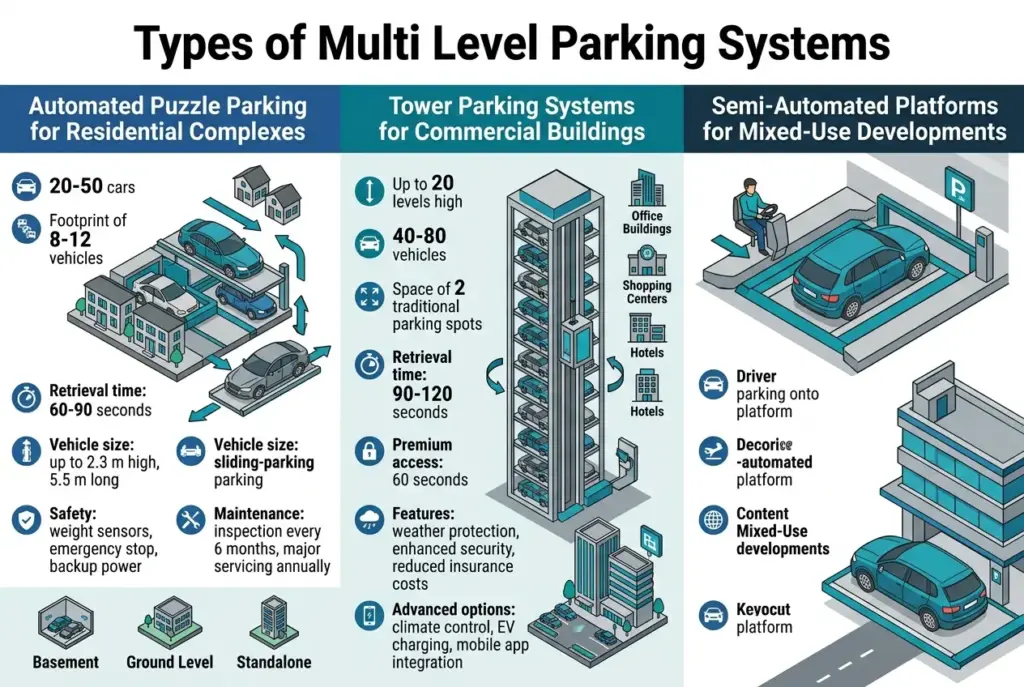
Puzzle parking systems work like a three-dimensional sliding puzzle, moving cars horizontally and vertically to create access paths. These systems are perfect for residential complexes where space comes at a premium. When you drive into the system, your car gets placed on a platform that can slide in multiple directions. The smart software calculates the most efficient movements to retrieve any vehicle without moving others unnecessarily.
The beauty of puzzle systems lies in their flexibility. You can install them in basements, ground-level areas, or even as standalone structures. Most residential puzzle systems handle 20-50 cars in a footprint that would normally accommodate just 8-12 vehicles. The retrieval time typically ranges from 60-90 seconds, making them practical for daily use.
Safety features include weight sensors, emergency stops, and backup power systems. The platforms can handle vehicles up to 2.3 meters in height and 5.5 meters in length, covering most passenger cars and small SUVs. Maintenance requirements are minimal, with routine inspections every six months and major servicing annually.
Tower Parking Systems for Commercial Buildings
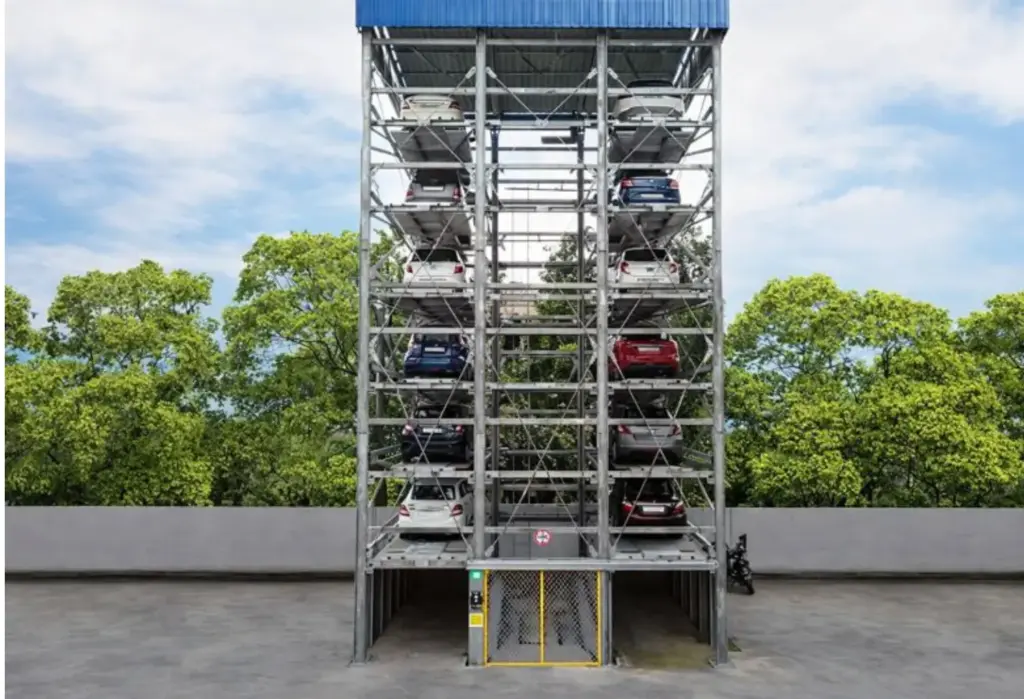
Tower parking represents the ultimate space-saving solution for commercial properties. These vertical systems can stack cars up to 20 levels high, creating parking for 40-80 vehicles in the space of two traditional parking spots. The system uses a central lift mechanism that rotates and moves vertically, similar to a Ferris wheel but with sophisticated automation.
Commercial tower systems excel in high-traffic environments like office buildings, shopping centers, and hotels. The retrieval process takes 90-120 seconds, with some premium systems achieving 60-second access times. Multiple entry and exit points can be configured to handle peak hour demands efficiently.
Key advantages include weather protection for vehicles, enhanced security through enclosed storage, and reduced insurance costs due to lower theft and damage rates. The systems accommodate various vehicle types through adjustable platforms and can integrate with building management systems for seamless operation. Advanced models include climate control, electric vehicle charging capabilities, and mobile app integration for remote vehicle retrieval scheduling.
Semi-Automated Platforms for Mixed-Use Developments
Semi-automated platforms strike the perfect balance between automation and user control, making them ideal for mixed-use developments that serve both residents and visitors. These systems require drivers to park their own vehicles on designated platforms, but automation handles the lifting, rotating, and stacking functions.
The driver-assisted approach reduces system complexity and costs while maintaining significant space savings. Users simply drive onto a platform, exit their vehicle, and press a button to activate the parking process. The platform then moves the car to an available storage position. Retrieval follows the reverse process, with the system bringing the vehicle back to ground level for easy access.
These systems typically double or triple parking capacity compared to traditional methods. They work exceptionally well in developments with varying peak usage times, such as buildings combining residential units, offices, and retail spaces. The simpler mechanical design means lower installation costs and reduced maintenance requirements compared to fully automated systems.
Platform systems can be configured as single or double-deep arrangements, with single-deep offering faster access times and double-deep maximizing space efficiency. Most installations include backup manual operation modes and can function during power outages using emergency generators.
Planning and Implementation Considerations
Site Assessment Requirements for Optimal Placement
Before breaking ground on any multi-level parking project, conducting a thorough site assessment forms the foundation of successful implementation. The evaluation process begins with analyzing soil conditions through geotechnical surveys to determine load-bearing capacity and drainage characteristics. Poor soil conditions can significantly increase construction costs and require specialized foundation solutions.
Traffic flow patterns around the proposed site need careful examination. Analyzing peak hour congestion, entry and exit points, and existing pedestrian pathways helps determine the optimal orientation and access points for the parking structure. The assessment should also consider proximity to major attractions, commercial districts, or residential areas that will drive demand.
Environmental factors play a crucial role in planning. Wind patterns affect structural design requirements, while sun exposure influences lighting needs and user comfort. Slope and elevation changes on the site impact drainage systems and accessibility compliance. Additionally, proximity to public transportation hubs can enhance the parking facility’s value proposition.
Space constraints often dictate the parking system type. Automated systems work well in tight urban spaces, while traditional ramp-style structures require more horizontal space. The assessment should evaluate maximum building height restrictions and setback requirements that influence capacity planning.
Local Zoning Regulations and Permit Requirements
Navigating local zoning laws represents one of the most complex aspects of multi-level parking implementation. Each municipality maintains specific regulations governing commercial parking structures, including height restrictions, setback requirements, and density limitations. Some areas classify parking structures differently based on whether they serve residential, commercial, or mixed-use developments.
Building permit applications typically require detailed architectural plans, structural engineering reports, and environmental impact assessments. The approval process can take anywhere from three to twelve months, depending on project complexity and local bureaucracy. Early engagement with planning departments helps identify potential roadblocks and streamline approval timelines.
Special use permits may be necessary in certain zoning districts where parking structures aren’t automatically permitted. These applications often require public hearings and community input sessions. Preparing for community concerns about traffic, noise, and visual impact strengthens the approval chances.
Fire department regulations heavily influence design requirements. Sprinkler systems, emergency access routes, and evacuation procedures must meet strict safety standards. Some jurisdictions require specific turning radii for emergency vehicles and minimum clearance heights throughout the structure.
Integration with Existing Building Infrastructure
Successful integration requires careful coordination between new parking systems and existing building utilities. Electrical systems need upgrades to handle additional lighting, ventilation, and automation equipment. The existing electrical panel capacity often requires assessment and potential expansion to support new demands.
Plumbing considerations include drainage for the parking levels and potential car wash facilities. Connecting to existing storm water management systems requires proper sizing and flow calculations. Some automated parking systems need specialized hydraulic connections that require new utility runs.
Structural integration presents unique challenges when adding parking to existing buildings. Load calculations must account for vehicle weight distribution and dynamic loads from moving platforms in automated systems. Connecting new structures to existing foundations requires detailed engineering analysis to prevent settlement or structural stress.
HVAC systems need modification to handle exhaust ventilation requirements in enclosed parking areas. Carbon monoxide detection systems become mandatory, and proper air circulation prevents humidity and temperature issues that could damage both vehicles and equipment.
User Accessibility and Safety Compliance Standards
Americans with Disabilities Act (ADA) compliance mandates specific design requirements for accessible parking spaces, pathways, and elevator access. Multi-level facilities must provide accessible parking on every level or ensure elevator access to designated accessible areas. The required ratio of accessible spaces varies by total capacity and local regulations.
Lighting standards ensure user safety and security throughout the facility. Minimum illumination levels help prevent accidents and deter criminal activity. Emergency lighting systems with battery backup maintain visibility during power outages, and exit signs must remain clearly visible from all parking positions.
Security features include surveillance camera placement, emergency call stations, and controlled access systems. Camera coverage should eliminate blind spots while respecting privacy concerns. Emergency communication systems allow users to contact security or emergency services directly from any level.
Safety barriers and protective features prevent vehicle damage and user injury. Automated systems require safety sensors that detect obstructions and prevent equipment operation when people are present. Height restriction barriers prevent oversized vehicles from entering areas where clearance is insufficient.
Regular safety inspections and maintenance schedules keep all systems functioning properly. Establishing clear protocols for emergency situations, including medical emergencies and equipment malfunctions, protects users and limits liability exposure.
Technology Features That Enhance User Experience
Mobile App Integration for Seamless Parking Reservations
Modern parking facilities now offer dedicated mobile applications that transform the entire parking experience. These apps allow drivers to reserve parking spots in advance, eliminating the frustration of circling around looking for available spaces. Users can view real-time availability, select their preferred parking level or zone, and secure their spot with just a few taps on their smartphone.
The reservation system typically includes features like arrival time scheduling, which helps facility operators manage traffic flow and prevents overcrowding during peak hours. Many apps also integrate with calendar systems, automatically suggesting parking reservations based on scheduled appointments or events. This level of integration creates a smooth, predictable parking experience that saves both time and stress.
Real-Time Availability Tracking and Notifications
Smart sensor networks throughout multi-level parking facilities provide instant updates on space availability across all floors and sections. These systems use various detection methods including ultrasonic sensors, camera-based recognition, and ground-loop detectors to monitor each individual parking space.
Drivers receive push notifications when spaces become available in their preferred areas, and digital displays at entrance points show real-time counts for each level. Some advanced systems even guide drivers to the nearest available spot using LED indicators and wayfinding displays. This technology eliminates the guesswork and reduces the time spent searching for parking, which directly translates to lower emissions and improved traffic flow within the facility.
Advanced Safety Sensors and Emergency Protocols
Multi-level parking systems incorporate comprehensive safety monitoring through strategically placed sensors and cameras. Motion detectors track pedestrian movement in stairwells and walking areas, while emergency call stations provide direct communication to security personnel or emergency services.
Fire detection systems include smoke sensors, heat detectors, and automatic sprinkler activation protocols specifically designed for enclosed parking environments. Vehicle detection sensors prevent structural damage by alerting drivers who might exceed height or weight limits. Emergency lighting systems automatically activate during power outages, and voice evacuation systems provide clear directions during emergencies.
The integration of AI-powered video analytics can detect unusual activities, accidents, or security threats, triggering immediate alerts to facility management and emergency responders.
Payment Processing and Automated Billing Systems
Contactless payment solutions have revolutionized parking transactions, supporting various methods from credit cards and mobile wallets to QR code payments. These systems process payments automatically upon entry or exit, eliminating the need for physical tickets or cash transactions.
Subscription-based models allow frequent users to set up monthly or annual passes with automatic billing, while dynamic pricing algorithms can adjust rates based on demand, time of day, or special events. Integration with corporate accounts enables seamless expense tracking for business travelers and employees.
Some facilities offer payment integration with popular ride-sharing apps and navigation systems, creating a completely unified transportation experience.
Remote Monitoring and Maintenance Capabilities
Cloud-based management platforms enable facility operators to monitor all parking systems from any location, providing real-time insights into occupancy patterns, equipment performance, and maintenance needs. Predictive analytics help identify potential equipment failures before they occur, reducing downtime and maintenance costs.
Remote diagnostic capabilities allow technical teams to troubleshoot issues without physical site visits, while automated maintenance scheduling ensures regular upkeep of critical systems. Energy management features monitor and optimize lighting, ventilation, and electrical systems based on occupancy levels and usage patterns.
These platforms also generate detailed reports on revenue, utilization rates, and customer satisfaction metrics, helping operators make data-driven decisions about facility improvements and pricing strategies.
Cost Analysis and Return on Investment
Initial Installation Costs Versus Long-Term Savings
Multi-level parking systems require a considerable initial investment in India, with costs typically ranging from ₹8 lakh to ₹25 lakh per parking slot depending on the parking technology, project size, automation level, and installation location. Fully automated parking systems are generally more expensive due to advanced machinery, sensors, and software integration, while hydraulic stack parking systems offer a more cost-effective solution for residential and commercial buildings.
The real value emerges through land optimization. A single ground-level parking spot can accommodate 2-8 vehicles using multi-level systems, effectively multiplying your parking capacity without expanding your footprint. Property developers save millions by avoiding additional land purchases or costly underground excavation projects.
Energy savings also contribute to long-term financial benefits. Automated systems eliminate the need for extensive lighting, ventilation, and heating systems required in traditional parking garages. Many facilities report 60-80% reduction in electricity costs compared to conventional parking structures.
Maintenance Expenses and Operational Efficiency
Multi-level parking systems demand regular maintenance to ensure smooth operation and safety compliance. Annual maintenance contracts typically cost 3-5% of the initial investment, covering routine inspections, lubrication, software updates, and component replacements. Automated systems require specialized technicians, which can increase service costs compared to traditional parking lots.
However, operational efficiency gains offset many maintenance expenses. These systems eliminate the need for parking attendants in most configurations, reducing labor costs by thousands of dollars monthly. Automated entry and exit processes minimize human error and streamline vehicle retrieval, reducing wait times and improving customer satisfaction.
Preventive maintenance proves crucial for system longevity. Well-maintained multi-level parking systems operate reliably for 20-25 years with proper care. Regular maintenance schedules prevent costly emergency repairs and extend equipment lifespan, protecting your investment.
Smart monitoring systems now provide real-time diagnostics, predicting potential issues before they cause system failures. This predictive maintenance approach reduces downtime and keeps operational costs manageable while maximizing system availability.
Revenue Generation Potential for Commercial Properties
Multi-level parking systems transform limited parking areas into profitable assets for commercial and residential properties in India. In cities like Mumbai, Pune, Bengaluru, and Delhi, where parking space is limited and land prices are high, property owners can maximize parking capacity without expanding their existing footprint.
These systems help apartments, malls, offices, hospitals, and commercial buildings accommodate more vehicles in the same area, improving convenience for residents and visitors. By increasing parking availability, property owners can also generate additional monthly income through paid parking services, tenant parking charges, and commercial parking management.
With rising urbanization and vehicle ownership in India, automated and stack parking systems have become a smart solution for optimizing space utilization while increasing property value.
Retail and office complexes benefit from improved customer and tenant satisfaction, leading to higher occupancy rates and rental premiums. Studies show properties with adequate parking command 10-15% higher lease rates compared to those with parking shortages.
Hourly parking rates in densely populated areas can generate substantial income. Multi-level systems enable property owners to accommodate more vehicles during peak hours, maximizing revenue during high-demand periods. Some installations report payback periods of 5-7 years through parking fee collections alone.
| Revenue Stream | Monthly Potential | Annual Impact |
| Monthly Parking Passes | ₹15,000 – ₹40,000 per space | ₹1.8 Lakh – ₹4.8 Lakh per space |
| Hourly Parking | ₹50 – ₹200 per hour | Depends on daily vehicle usage |
| Event Parking | ₹500 – ₹2,000 per event | Seasonal revenue growth during festivals & events |
Additional revenue opportunities include electric vehicle charging stations, car wash services, and partnerships with ride-sharing companies. These complementary services enhance the value proposition while generating supplementary income streams that improve overall return on investment.
Multi level car parking systems offer a smart solution to today’s growing parking challenges. These structures maximize space efficiency, reduce construction costs compared to traditional parking methods, and can incorporate advanced technology features like automated payment systems and real-time availability tracking. From automated mechanical systems to semi-automated platforms, there are various options to fit different budgets and space requirements.
When considering a multi level parking project, success depends on careful planning that takes into account traffic flow, safety regulations, and user experience. The upfront investment may seem significant, but the long-term benefits include increased revenue potential, reduced land usage, and improved customer satisfaction. For businesses and municipalities facing parking shortages, multi level systems represent a practical way to meet demand while creating a better experience for drivers.
Multi Level Car Parking Solutions by StackParking.in
StackParking.in by Gubbi specializes in advanced multi level car parking systems across Mumbai, Thane, Navi Mumbai, Pune, and other cities in India. The company provides design, manufacturing, installation, and AMC services for stack parking, puzzle parking, tower parking, and automated parking solutions tailored to modern urban infrastructure needs.
Conclusion
Multi level car parking systems offer a smart and efficient solution to today’s growing parking challenges in urban areas. These systems maximize space utilization, reduce construction costs compared to conventional parking structures, and can integrate advanced features such as automated operations, smart access control, and real-time parking management. From hydraulic stack parking systems to fully automated parking solutions, there are multiple options available to suit different property sizes, budgets, and parking requirements.
When planning a multi level parking project, success depends on proper design, traffic flow management, safety compliance, and user convenience. Although the initial investment may appear significant, the long-term advantages include higher parking capacity, better land utilization, increased property value, and improved customer satisfaction. For residential buildings, commercial complexes, malls, hospitals, and municipalities facing parking shortages, these systems provide a reliable and future-ready solution.
FAQs About Multi Level Car Parking
How does Multi Level Car Parking work?
Multi-level car parking systems use vertical space to park multiple vehicles within a compact area. These systems operate using hydraulic lifts, platforms, pallets, or automated mechanisms that move vehicles vertically and horizontally for efficient parking and retrieval.
What are the 4 types of parking?
The four common types of parking are:
- Parallel Parking
- Perpendicular Parking
- Angle Parking
- Multi Level Car Parking
Modern urban infrastructure increasingly prefers multi-level parking systems because they maximize space utilization.
What is the cost of a multi level parking system?
In India, the cost of a multi-level parking system generally ranges from ₹2 lakh to ₹25 lakh per car slot depending on the parking technology, automation level, project size, and installation requirements.
Is it multi story or multi storey car park?
Both terms are correct. “Multi-storey car park” is commonly used in British English, while “multi-story parking garage” is more common in American English.
Is it multi-level or multi-storey?
Both terms refer to parking structures with multiple parking floors. “Multi-level parking” is widely used in India and commercial infrastructure projects.
What is the Supreme Court decision on car parking in flats?
The Supreme Court of India has ruled that open parking spaces and stilt parking areas are part of common areas and cannot be sold separately by builders unless legally specified under local regulations.
What is the cost of a 4 person lift in India?
A standard 4-person passenger lift in India typically costs between ₹4 lakh and ₹8 lakh depending on the brand, technology, number of floors, and installation requirements.
How many cars can be parked in 1000 sq ft?
In conventional parking, around 4 to 6 cars can be parked in 1000 sq ft. With stack parking or multi-level parking systems, the capacity can increase significantly depending on the system design.
How much does it cost to build a multi-storey car park?
Traditional multi-storey parking construction in India can cost between ₹15 lakh and ₹40 lakh per parking slot when land, civil construction, excavation, and structural costs are included.
Which type of car parking is best?
The best parking system depends on the project requirement. Stack parking systems are ideal for residential apartments, while tower parking and automated parking systems are better suited for commercial buildings and high-density urban locations.
What is Rule 3 of parking places rules?
Rule 3 generally refers to local parking regulations related to parking area management, vehicle movement, safety compliance, and designated parking usage. The exact interpretation may vary depending on state and municipal authority guidelines in India.
What are the disadvantages of tandem parking?
Tandem parking may create inconvenience because one vehicle can block another. It also requires coordination between vehicle owners and may reduce ease of access compared to automated or independent parking systems.
Why are multi level car parking systems important in India?
Multi level parking systems help solve urban parking problems by increasing parking capacity without requiring additional land. They are highly useful in cities like Mumbai, Pune, Bengaluru, and Delhi where space is limited and vehicle ownership is rapidly growing.
Which industries use multi level parking systems?
Multi level parking systems are commonly used in:
- Residential Apartments
- Commercial Buildings
- Shopping Malls
- Hospitals
- Hotels
- Corporate Offices
- Municipal Parking Projects
- Airports
Where can I get multi level car parking solutions in India?
StackParking.in provides stack parking, puzzle parking, tower parking, and automated multi level car parking solutions across Mumbai, Thane, Navi Mumbai, Pune, and other cities in India.
Read Also – Stack Parking for Apartments