What Is a Stack Parking System?
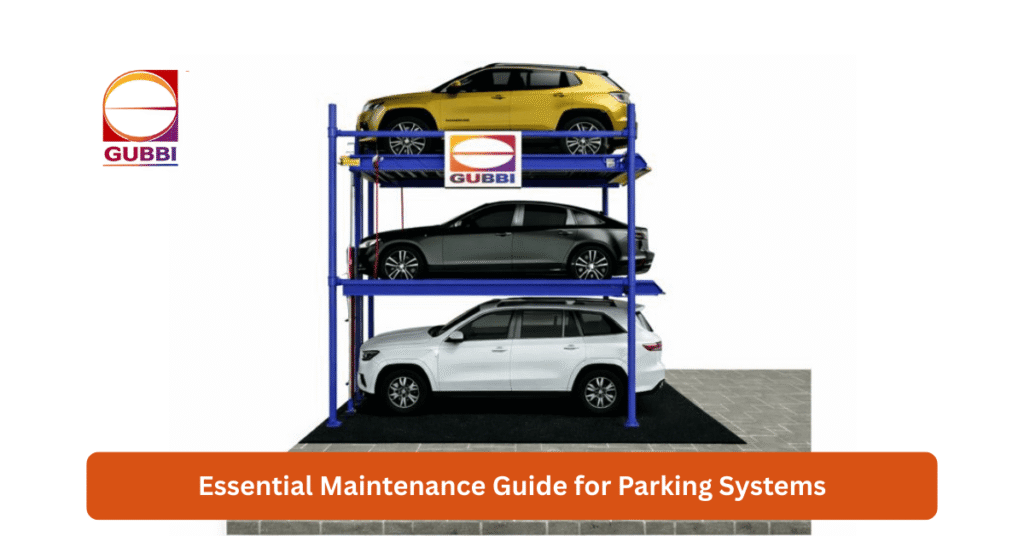
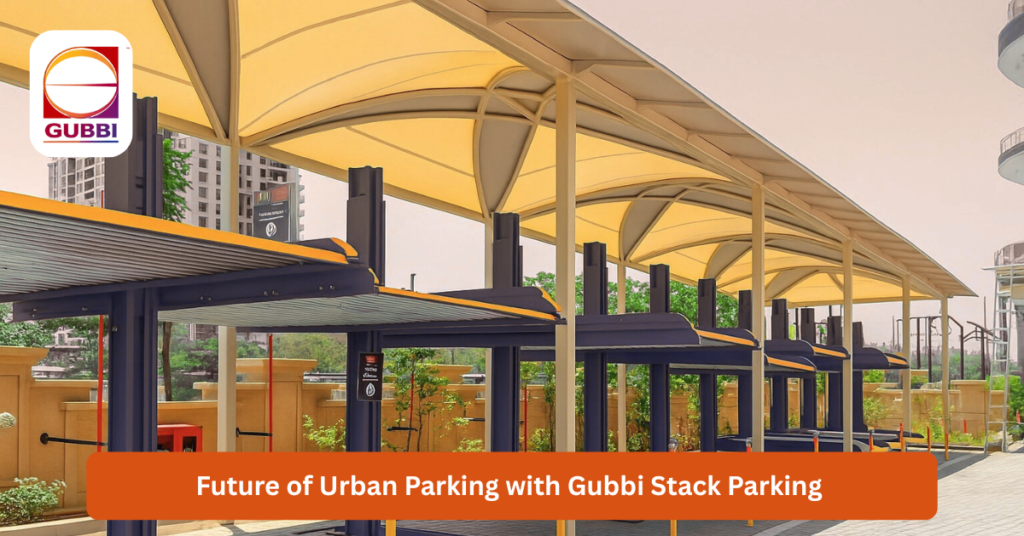
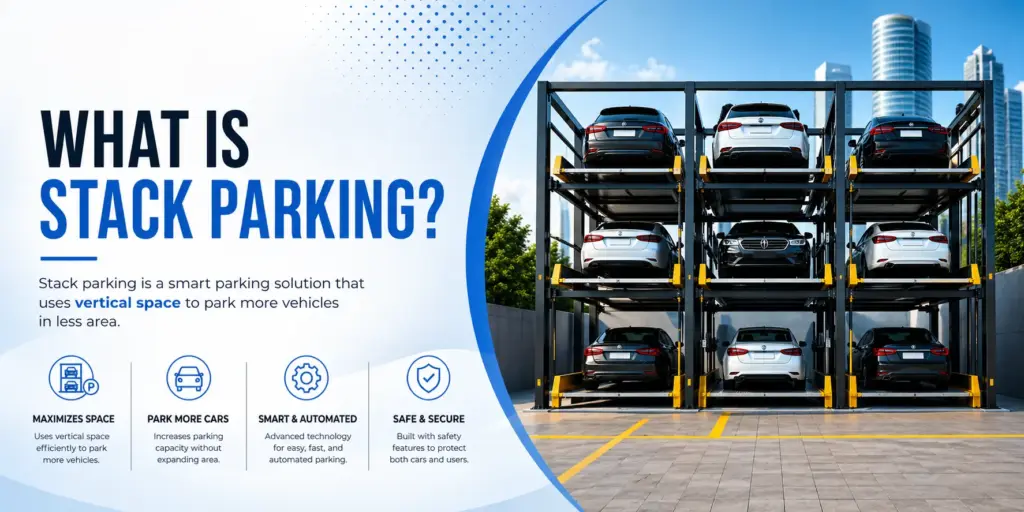
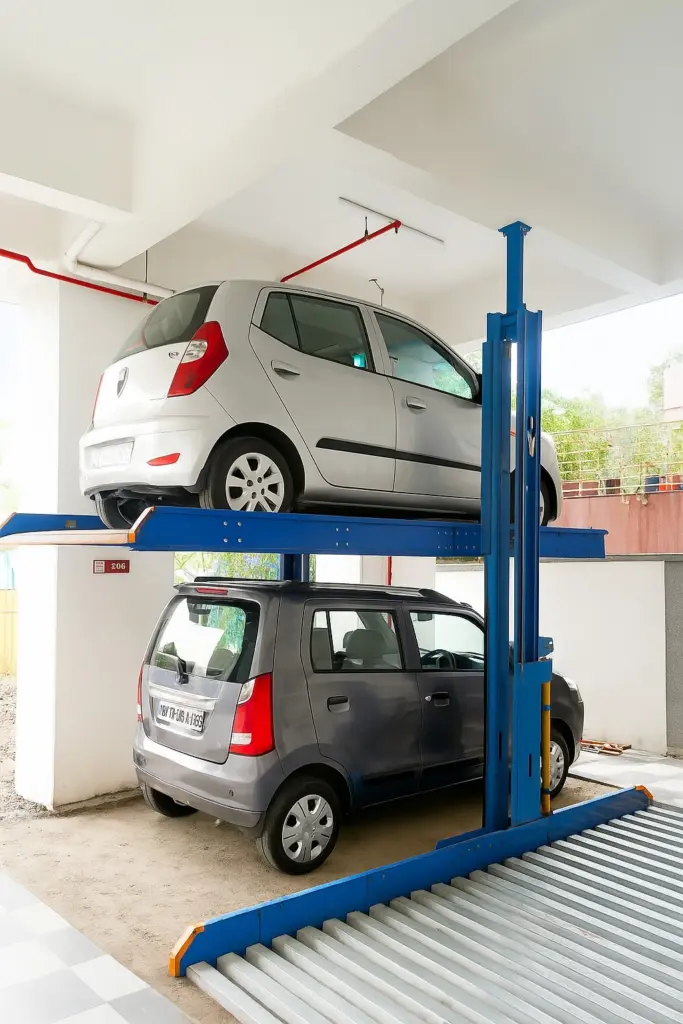
A stack parking system is a mechanical parking solution that allows multiple cars to be parked vertically within the space of a single parking spot. It uses hydraulic or motorised platforms to lift one vehicle and create space below for another, increasing parking capacity without expanding the area. Typically, 2–2.5 tons per car.
Why Stack Parking Is Needed in India
Urban cities across India, from Mumbai to Pune, are facing a growing challenge too many vehicles and not enough parking space. Traditional parking methods are no longer efficient for residential buildings, commercial complexes, or industrial spaces.
A stack parking system offers a practical and scalable solution by using vertical space instead of expanding horizontally.
In this guide, you’ll learn how it works, its types, benefits, cost factors, and whether it’s the right fit for your property.
How Does a Stack Parking System Work
A stack parking system operates using a platform-based lifting mechanism:
- A car is driven onto a platform
- The system lifts the vehicle upward
- Another car is parked below
- The process can be repeated depending on the number of levels
Advanced systems include automated controls, safety locks, and sensors to ensure smooth and safe operation.
Types of Stack Parking Systems
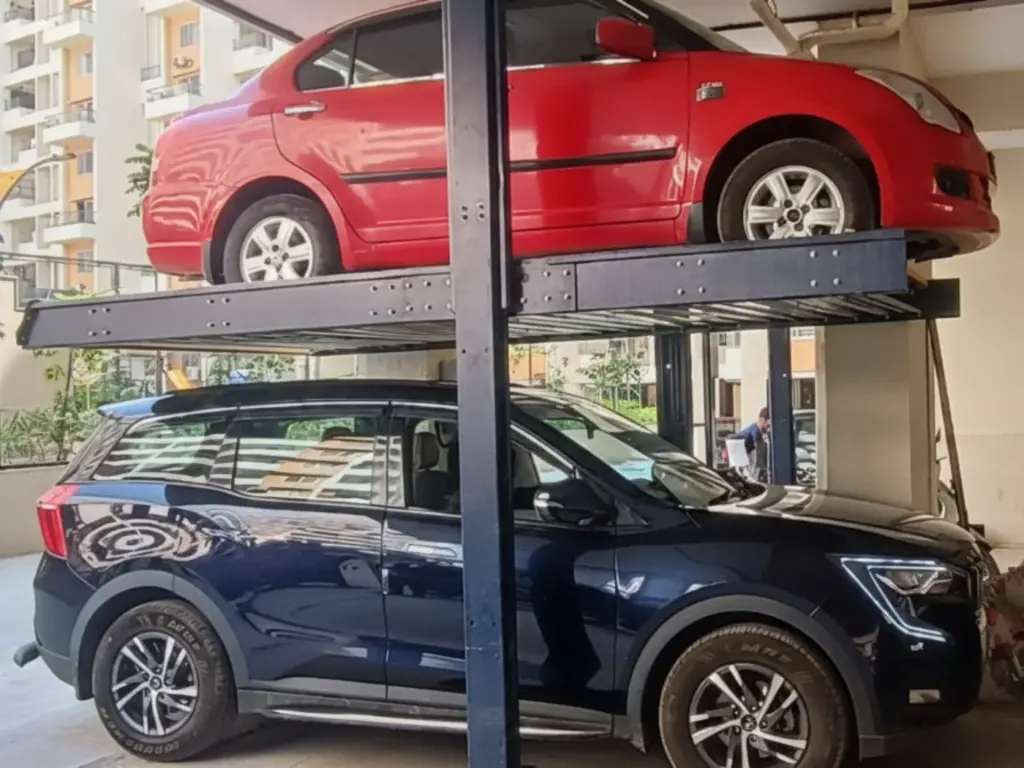
1. Two-Level Stack Parking
- Most commonly used
- One car above, one below
- Ideal for residential buildings
2. Multi-Level Stack Parking
- 3 to 6 levels or more
- Suitable for commercial spaces, malls, and offices
- Higher capacity with an advanced structure
3. Pit Stack Parking
- Lower level constructed below ground
- Maintains a clean look above ground
- Preferred for premium properties
4. Independent vs Dependent Systems
- Dependent: The lower car must be moved first
- Independent: Each car can be accessed directly
Key Benefits of Stack Parking Systems
1. Space Optimisation
Maximises limited land by using vertical space efficiently.
2. Cost-Effective Alternative
Avoids expensive basement construction and reduces civil costs.
3. Faster Installation
Quick to install compared to traditional parking structures.
4. Enhanced Safety
Includes features like:
- Anti-fall locking systems
- Emergency stop controls
- Vehicle positioning sensors
5. Ideal for Urban India
Highly effective in cities like Mumbai, Thane, Navi Mumbai, and Pune.
Where Are Stack Parking Systems Used
- Residential societies and apartments
- Commercial office buildings
- Hospitals and schools
- Car showrooms
- IT parks and business hubs
Is Stack Parking Worth It?
If your property faces:
- Limited parking space
- Increasing number of vehicles
- High land costs
Then a stack parking system is not just useful—it’s essential.
Stack Parking vs Traditional Parking
| Feature | Stack Parking | Traditional Parking |
|---|---|---|
| Space Usage | Vertical (high efficiency) | Horizontal (limited) |
| Cost | Moderate | High |
| Scalability | Easy to expand | Difficult |
| Installation Time | Fast | Slow |
Things to Consider Before Installation
- Load capacity (typically 2–2.5 tons per car)
- Available height clearance
- Power backup requirements
- Maintenance and servicing
- Local approvals and compliance
Why Choose Gubbi Stack Parking
At Gubbi Stack Parking, we design and manufacture reliable parking systems tailored for Indian conditions.
What makes us different:
- Custom solutions for residential and commercial projects
- Durable, high-quality materials
- Strong focus on safety and usability
- End-to-end support across Maharashtra
We don’t just install systems—we solve real parking challenges.
Future of Parking in India
With rapid urbanisation and rising vehicle ownership, mechanical parking systems are becoming a necessity rather than a luxury.
Government initiatives and smart city planning are encouraging space-efficient parking solutions, making stack parking a long-term investment.
Stack Parking System Cost in India
The cost of a stack parking system in India varies based on the type of system, number of levels, load capacity, and site conditions. However, having a general price estimate helps in planning your project better.
Average Cost Range
- 2-Level Stack Parking: ₹2.5 lakh – ₹4.5 lakh per car
- 3-Level Stack Parking: ₹4.5 lakh – ₹7 lakh per car
- Multi-Level Stack Parking (4–6 Levels): ₹7 lakh – ₹15 lakh+ per car
- Pit Stack Parking: ₹5 lakh – ₹10 lakh per car
- Fully Automated Stack Systems: ₹10 lakh – ₹25 lakh+ per car
- Note: Prices may vary depending on customisation, project size, and location.
FAQs About Stack Parking Systems
What is a stack parking system in simple words?
A stack parking system allows multiple cars to be parked vertically in the space of one parking spot using lifting platforms.
What is the cost of a stack parking system in India?
The cost depends on the number of levels, the type of system, and customisation.
Is stack parking safe?
Yes, modern systems include multiple safety features and are designed to handle heavy loads securely.
Can it be installed in existing buildings?
Yes, many systems can be retrofitted into existing residential and commercial spaces.
How much maintenance is required?
Minimal maintenance is required, with periodic servicing.
Final Thoughts
A stack parking system is one of the most efficient solutions to modern parking challenges. It saves space, reduces costs, and improves convenience while preparing your property for future needs.
For builders, developers, and property owners, adopting this system is a smart and strategic decision.
Need Expert Advice?
If you’re planning to install a system or need a site evaluation, Gubbi Stack Parking can help you choose the right solution based on your space and budget.
Read Also – Why Stack Parking System Mandatory